

Yes — but with an important qualification: digital marketing is becoming easier to execute, while becoming harder to master and differentiate.
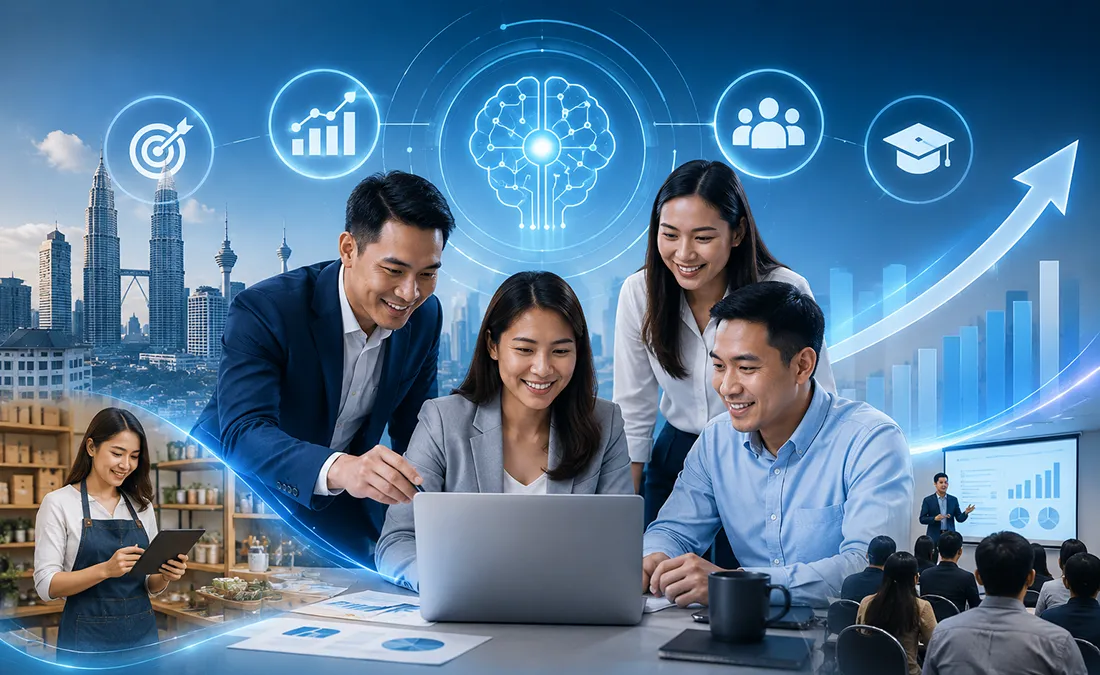
After more than two decades in digital marketing, I have watched the profession move from websites and search engines to social media, paid media, analytics, automation and now artificial intelligence. AI is not simply removing tools from the marketer’s toolbox. It is changing what the toolbox is for.
The biggest change is the shift from manual execution to AI-assisted orchestration. Tasks that once required hours of research, writing, design, optimisation and reporting can increasingly be completed with AI tools and automated workflows.
The evolution can be understood in three stages.
Websites, SEO, Google Ads, email, social media, analytics and content were the core tools. The main challenge was execution: how to make all the channels work.
As digital matured, marketers added marketing automation, CRM, GA4, Google Tag Manager, Search Console, social listening, conversion optimisation, remarketing, video, influencer marketing and dashboards. The challenge became integration.
From 2026 onward, AI is becoming a layer across research, content, search, advertising, analytics, sales and automation. Examples include ChatGPT, Gemini, Claude, Perplexity, NotebookLM, generative image and video tools, Google AI-powered advertising, Meta Advantage+, Zapier, Make, n8n and AI agents.
AI is making many digital marketing tasks faster and less labour-intensive. A marketer can generate research summaries, content ideas, ad variations, creative concepts, reports and workflow steps much faster than before.
However, easier execution does not mean easier marketing. When everyone can produce content and campaigns quickly, the scarce resources become strategy, customer insight, creativity, trust, data, distribution and judgment.
One of the biggest misconceptions is that AI search means SEO is dead. I see the opposite. SEO is evolving from a narrow focus on rankings and keywords into a broader discipline of search visibility.
Digital marketers increasingly need to think about SEO together with Answer Engine Optimisation (AEO), Generative Engine Optimisation (GEO), brand authority, entities, structured information and visibility across AI-powered search experiences.
Traditional paid-search work involved extensive manual management of keywords, bids, audiences, ad variations and optimisation. AI-powered advertising is taking over more of those operational decisions.
That changes the role of the specialist. The valuable question is no longer simply ‘How do I operate Google Ads?’ It becomes ‘How do I use Google’s AI systems to acquire the right customers profitably?’
Some digital marketing tasks will disappear or become heavily automated. That is different from saying the profession will disappear.
Uses AI mainly to generate or execute tasks. This is increasingly commoditised.
Uses AI to research, analyse, create, optimise, automate and report.
Connects business objectives, customers, offers, data, channels, AI systems and revenue.
Understand the marketing system behind Google Ads, Meta Ads, SEO, analytics and other platforms.
Build repeatable AI workflows rather than using AI only for occasional content generation.
Understand how SEO, AEO, GEO, entities, brand authority and AI-powered search experiences connect.
Build knowledge around APIs, webhooks, Zapier, Make, n8n, AI agents, RAG, knowledge bases and CRM integration.
Move beyond traffic and engagement toward leads, conversion, revenue and customer lifetime value.
Learn positioning, customer economics, sales, profitability and the customer journey.
Create frameworks, audits, assessments, workflows, playbooks and proprietary methodologies that are difficult to commoditise.
As AI makes production cheaper, differentiation becomes more important. The capabilities likely to become more valuable include:
A better question is: Which 30–50% of my current work can AI already do faster, better or cheaper?
Then automate it.
If a marketer continues charging mainly for manual production that AI can complete in minutes, clients will eventually question the value. The opportunity is to move upstream — from producing individual marketing assets to designing the system that produces, measures and improves them.
I do not believe the future is human versus AI. I believe it is human plus AI versus human without AI.
The digital marketer of the future will not necessarily be the person who knows the most tools. It will be the person who knows which tool to use, when to use it, how to connect it, what to automate, what not to automate and — most importantly — why.
Digital marketing may become easier to execute, but harder to differentiate. That is not necessarily bad news. For experienced marketers, it creates an opportunity to move from operator to strategist, from service provider to growth partner, and from selling individual activities to building intelligent marketing systems.
Yes. AI is making research, content creation, creative production, advertising optimisation, reporting and automation faster. However, strategy and differentiation are becoming more important.
AI is likely to automate many repetitive digital marketing tasks, but human expertise remains important for strategy, positioning, customer understanding, creative direction, business judgment and accountability.
Yes. SEO remains important, but it is evolving. Marketers should combine SEO with AI-search visibility, AEO, GEO, entity optimisation and brand authority.
Prioritise AI literacy, AI workflows, automation, AI search, analytics, business strategy, customer economics and AI-agent concepts.
The role is moving toward AI-powered growth strategy: connecting business goals, customers, data, channels, technology and AI systems to measurable outcomes.

